Low-Carb Spring Vegetables for Type 1 Diabetes: 4 Recipes I Actually Cook
Four low-carb spring vegetable recipes — asparagus, strawberry spinach salad, artichokes, and butter-braised radishes — with real carb counts from a longtime T1D.

Why spring vegetables matter when you have T1D
If you’ve been carb counting for a decade or more, you’ve probably noticed something the glossy diabetes pamphlets rarely mention: non-starchy spring vegetables are the cheapest insurance policy your meal plan has.
I’ve been dosing insulin against food since 1983. The meals I remember screwing up are almost never vegetable-forward plates. They’re the pasta nights, the rushed convenience-store sandwiches, the “just a bite” of birthday cake that turned into three bites. The plate centered around asparagus, artichokes, or a good spring salad? Those plates almost always land softly — predictable rise, clean return, no 3 a.m. correction.
Spring produce in particular is a kind of annual reset. By April, I’m tired of the heavy winter food that dominates carb counts with starches and sauces. What’s coming into the market — asparagus, spring greens, artichokes, early radishes — is almost all under 5g net carbs per serving, high in fiber, and generous enough with flavor that you don’t need to drown it in anything to make it taste good.
A recent roundup by Catherine Newman at the diaTribe Foundation highlighted four spring vegetable recipes that are simple, low-carb, and don’t require fancy ingredients. I’ve been cooking versions of all four for years. Here’s what they actually look like on a T1D plate — with the carb counts I actually dose against.
What “low-carb” actually means here
Before we get to the food, one quick note on numbers.
Per the American Diabetes Association’s Standards of Care 2025, there is no single carbohydrate target that fits every person with T1D — eating patterns should be individualized with your care team. The ADA’s non-starchy vegetables guidance is the important frame for this article: asparagus, artichokes, radishes, spinach, and most leafy greens are all non-starchy, which means you can eat generous portions without driving a blood sugar spike.
The carb counts below are per-serving estimates in total carbohydrates based on USDA FoodData Central. I’ll flag net carbs where fiber makes a meaningful difference. These are cooking estimates, not lab measurements — always check your own response.
1. Roasted Lemon-Parmesan Asparagus

≈ 5g total carbs · 3g net carbs · per 1 cup serving (≈150g)
Asparagus is the poster child for a T1D-friendly vegetable. A full cup of cooked asparagus spears is roughly 5 grams of total carbs, about 2 grams of which is fiber, leaving around 3 grams net. I do not even round-dose for this one — I’ll roast a whole bunch (around 450g / 1 lb), eat half the pan, and treat it as a free side against whatever’s on the plate.
Catherine’s roasted version with lemon and Parmesan is exactly how I cook it when I want it to feel like a dish instead of a side. Quick method:
- Trim the woody ends (bend gently — they snap where they want to)
- Toss with olive oil, salt, pepper
- Roast at 425°F for 10–12 minutes
- Finish with lemon zest, a squeeze of juice, and a light shower of Parmesan
What I watch for: if you drown asparagus in a heavy glaze or balsamic reduction, you can stealth-add 8–10g of carbs fast. The roasted-with-lemon approach keeps it under 6g and lets the vegetable do the work. Read Catherine’s full recipe on diaTribe →
2. Spinach Salad With Strawberry Vinaigrette
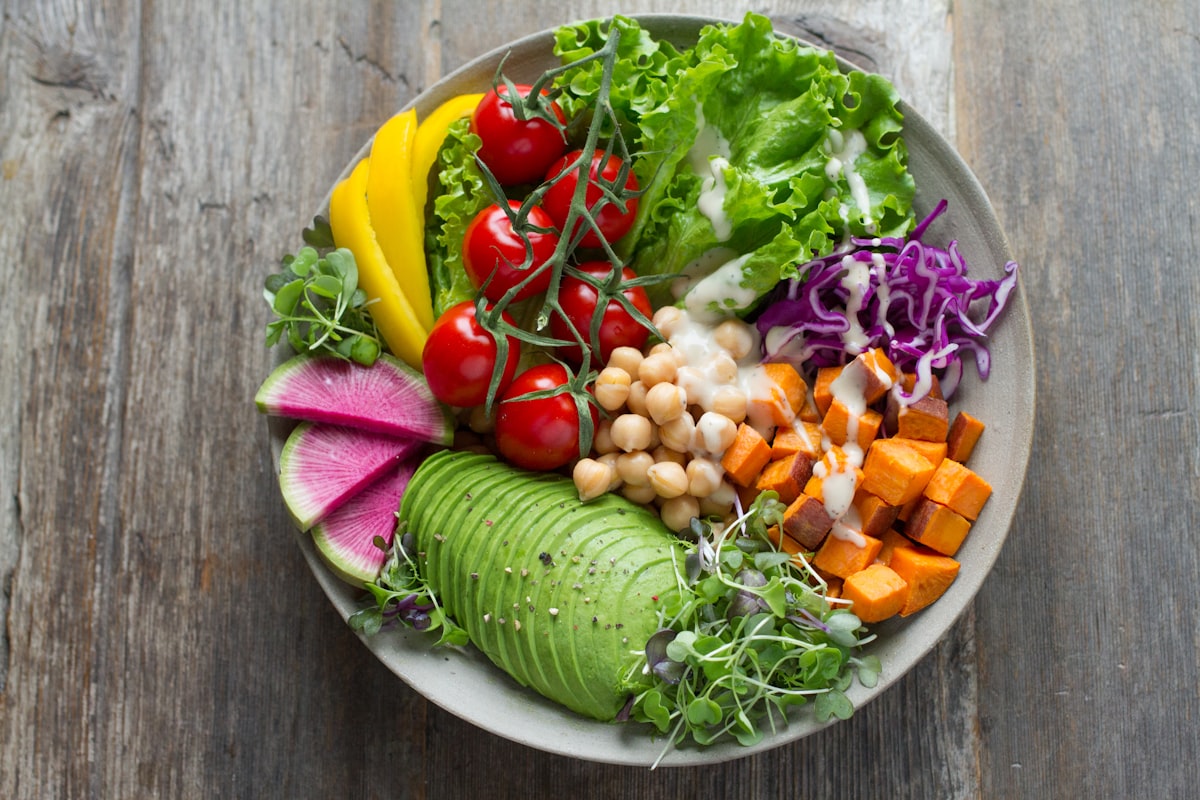
≈ 8g total carbs · 5g net carbs · per large salad serving
This is the recipe I’d push any newly-diagnosed T1D cook toward first, and it’s the one I personally make most often in spring. Catherine’s twist of blending strawberries into the dressing (instead of just slicing them on top) is the detail I actually care about — it gives you strawberry flavor in every bite without adding a full cup of berries to the plate.
The carb math:
- 3 cups raw spinach → ~2g total carbs
- Strawberry vinaigrette (3–4 strawberries blended + olive oil + vinegar) → ~4g total carbs
- Optional toppings — chopped almonds (+1g), crumbled feta (+1g) — still under 10g total
Add grilled chicken or cold salmon and you have a full lunch at under 10g carbs and no meaningful post-meal spike. For four decades this is the template I’ve come back to: leafy green + high-flavor acid + protein. It’s boring to read and brilliant to eat.
What I watch for: store-bought “fruit” vinaigrettes are almost always sweetened. The whole point of making the dressing yourself is that you control the sugar. Read Catherine’s full recipe on diaTribe →
3. Basic Artichokes (Boiled, with Butter)

≈ 14g total carbs · 7g net carbs · per medium whole artichoke
Artichokes are the interesting one on this list. A single medium globe artichoke is around 14g of total carbs — higher than the others — but with roughly 7g of fiber, which makes the net carb impact closer to 7g. They also have a glycemic response pattern that a lot of long-duration T1Ds notice: slower, flatter, friendlier than the total-carb number would predict.
Catherine’s approach is my approach: boil them in salted water. Don’t overthink it.
- 1 medium artichoke per person
- Trim the pointy tips of the leaves with kitchen scissors
- Boil in generously salted water for 30–40 minutes until a leaf pulls out cleanly
- Serve warm with melted butter, lemon, and sea salt
Dosing note: I dose half the total carbs upfront (around 7 units of carb coverage per artichoke for me, at my ratios) and correct if the CGM disagrees. The high fiber slows the curve enough that I almost never see a steep post-meal rise. Read Catherine’s full recipe on diaTribe →
4. Butter-Braised Radishes

≈ 3g total carbs · 2g net carbs · per 1 cup cooked
This is the one I’ll bet you have never made. I hadn’t either, the first time I tried it. If you only know radishes as the hard, peppery pink thing on a crudité platter, cooking them is a revelation — they turn sweet, tender, almost caramelized, and carry butter the way roasted turnips do.
At 3g of carbs per cooked cup, this is the lowest-impact vegetable on the whole list. Catherine’s butter-braised method:
- Halve a bunch of red radishes
- Melt butter in a skillet over medium heat
- Add radishes, a pinch of salt, and enough water to come halfway up
- Cover, braise 8–10 minutes, then uncover and let the liquid reduce
- Finish with fresh herbs (parsley, chives, dill — whatever you have)
Why I love this for T1D specifically: the vegetable itself is negligible on the carb ledger, so the dish lives or dies on the fat and the seasoning. You can build flavor without building carbs. It’s the kind of plate where you can eat twice the portion you planned and still not dose against it. Read Catherine’s full recipe on diaTribe →
A full spring plate, priced in carbs
Here’s one meal I’ll actually put together from this list, with the carb math I’d dose against:
| Component | Portion | Total carbs | Net carbs |
|---|---|---|---|
| Spinach + strawberry vinaigrette | 1 large salad | 8g | 5g |
| Roasted lemon-Parmesan asparagus | 1 cup | 5g | 3g |
| Butter-braised radishes | 1 cup | 3g | 2g |
| Grilled chicken breast | 150g | 0g | 0g |
| Total | ~16g total | ~10g net |
That’s a full, visually generous dinner plate at 10 grams of net carbs — roughly the same as a single small apple. If you’re running a modern AID (automated insulin delivery) system, this is the kind of meal where the algorithm essentially handles itself. If you’re on MDI, it’s the kind of meal where a small pre-meal bolus and you’re done.
The spring reset
I’ll end where Catherine Newman did in the original piece: there is something elemental about spring produce. After four decades of doing this, I’ve learned to pay attention to the seasonal moments that rebuild my relationship to food — and early spring, when asparagus and artichokes hit the market, is the best of them.
Spring is the annual reminder that a diabetes-compatible diet is not a diminished diet. It is the diet that the best home cooks eat anyway. Plants, center of the plate. Real fat. Fresh acid. Nothing hidden in the sauce.
One good spring salad is the cheapest insulin plan you’ll ever write.
— John Chitta
This article was written from lived experience and is inspired by Catherine Newman’s recipe roundup at the diaTribe Foundation. Recipes are credited to Catherine Newman. Carb estimates are my own, based on USDA FoodData Central and a lifetime of dosing against them.
References
- Low-Carb Spring Vegetables Made Easy (original recipe roundup) · diaTribe Foundation — by Catherine Newman
- USDA FoodData Central · U.S. Department of Agriculture
- Eating Patterns and Meal Planning — Standards of Care in Diabetes 2025 · American Diabetes Association
- Carbohydrates and Diabetes · American Diabetes Association
- Non-starchy Vegetables · American Diabetes Association